

How Teen Angst, Fighter Jets, Baseball, and a Runaway Bus Can Help You Lead Enterprise Transformation
Dismantling Functional Silos and Reducing Enterprise Complexity in the Post-AI Era
Organizational culture is not a passive backdrop; it is an active, invisible architecture consisting of a shared mindset, unwritten rules, and the collective scripts driven by leadership. It acts as a powerful operational force that can either fuel strategic acceleration or quietly suffocate change long before it reaches implementation. When major strategic transformations or corporate turnarounds stall, executives routinely point to tactical indicators: a missed deadline, a broken software integration, or an exhausted budget. However, these technical failures are rarely the root cause. Projects and strategies do not fail only because of flowcharts; they fail because of the performative environment they are forced to inhabit.
To understand why strategic execution breaks down, executive leaders must look past traditional metrics and evaluate the hidden behavioral dynamics playing out across their enterprise, what we call the "Culture Theater." By looking back at four iconic movies, executives can recognize the institutional pathologies stalling their growth and anchor their remediation efforts in established management science.
Moneyball: Dismantling Legacy Bias
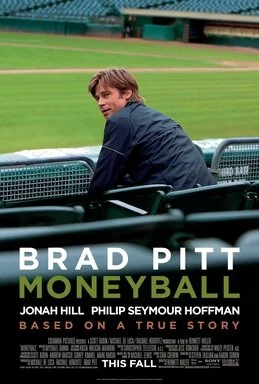
In the early 2010s, the Houston Astros were a baseball punchline. Nicknamed "The Lastros," the franchise suffered three consecutive 100-loss seasons, fundamentally shackled by traditional scouting methods that relied heavily on gut instinct and historical biases. The front office operated with fierce dogmatism, evaluating talent based on subjective visual impressions rather than objective data. They were losing consistently, yet the institutional culture vehemently resisted change because modern methods threatened a century-old belief system of how the game "should" be played.
The breakthrough only came when new leadership radically discarded the legacy playbook, introducing data science and algorithmic analytics to identify undervalued talent. This transformation represents the real-world execution of the Moneyball philosophy that shattered the old guard and propelled a historically bad franchise into a World Series champion.
Organizations of all sizes operate within this Moneyball cultural trap. They cling to legacy processes, outdated technologies, and anecdotal decision-making simply because they represent comfortable traditions. When a modern strategic initiative is introduced, the legacy guard instinctively mocks it or passive-aggressively starves it of resources. They do this because they view new methodologies as a direct attack on their personal expertise, historical track record, and corporate identity.
This behavioral friction is deeply rooted in established management science. In her landmark research published in the Strategic Management Journal, Harvard Business School professor Dr. Dorothy Leonard-Barton introduced the foundational concept of core capabilities and core rigidities to explain why successful organizations suddenly paralyze themselves when faced with shifting environments. Her empirical work proved that an organization’s core capability, which includes the deeply embedded values, skills, and legacy systems that originally made it successful, inherently hardens over time.
When the external environment shifts or a new strategic methodology arises, these deeply institutionalized capabilities flip into toxic liabilities. The legacy guard fiercely protects the old methods not because they actively desire an operational loss, but because their professional identity, cognitive frameworks, and self-worth are structurally bound to the legacy system.
A Moneyball culture values the familiarity of a comfortable routine over the competitive necessity of an optimized future. For an executive seeking to successfully navigate organizational rigidities and execute a turnaround, leadership must be willing to confront this institutional dogmatism. Strategic change requires an objective assessment of what actually drives performance, a willingness to dismantle the sacred cows of historical operations, and the courage to replace legacy bias with modern, measurable accountability.
The Breakfast Club: Breaking Down Functional Silos

In John Hughes’ 1985 classic The Breakfast Club, five high school students from entirely different social factions are forced into Saturday detention. Initially, they refuse to interact, safely hidden behind their rigid stereotypes: the Jock, the Brain, the Princess, the Criminal, and the Basket Case. They view each other with a defensive, dismissive attitude that whispers, "You wouldn't understand my world." Corporate organizations routinely suffer from their own version of The Breakfast Club. Over time, departments harden into rigid, isolated functional cliques—Sales, IT, Marketing, Operations, and Legal. Each department develops its own internal language, insular metrics, and psychological armor.
When a cross-functional strategic project is introduced, these silos immediately retreat to their respective corners. IT dismisses the business units as technically illiterate; Sales views compliance as a bureaucratic anchor; Operations assumes corporate leadership is completely disconnected from the on-the-ground reality. This cultural block creates a paralyzing "you wouldn't understand" barrier to integration. Departments protect their turf not out of malice, but out of fear of being misjudged or compromised by those outside their immediate silo.
This tribal behavior is explained by researchers Blake Ashforth and Fred Mael, who pioneered the integration of Social Identity Theory in the organizational context within the Academy of Management Review. Drawing from foundational work on human group dynamics, Social Identity Theory demonstrates that the moment an organization creates functional divisions, employees automatically undergo social categorization.
This categorization instantly triggers an "In-group vs. Out-group" bias. Employees overvalue the traits, stresses, and intelligence of their own department while viewing out-groups with automatic suspicion. This psychological wall generates a defensive, protective posture. The science proves that organizational silos are not caused by bad communication protocols, but by an unmanaged sociological drive to protect the in-group from perceived out-group judgment.
The breakthrough in the film only occurs when the students step out of their assigned seating, drop their protective guards, and actually listen to one another. They discover that despite their surface-level differences, they are all navigating the exact same systemic pressures. For an executive seeking to heal this cultural friction, the remedy is identical. Breaking down silos cannot be achieved by forcing a new software tool or a rigid flowchart down the organization's throat. It requires creating intentional space for teams to lower their armor, look past functional stereotypes, and actively listen to the shared operational challenges they are all collectively trying to solve.
Top Gun: Re-Architecting Recognition and Governance

In Tony Scott’s 1986 blockbuster Top Gun, elite fighter pilots gather at an exclusive naval weapons school to compete for a single, prestigious trophy. The film’s tension is driven by the clash between Maverick, a brilliant but reckless pilot who flies by his own rules to chase individual glory, and Iceman, his hyper-disciplined rival. Maverick wants to be the "Ace" pilot of the skies, but his dangerous, unpredictable solo maneuvers routinely leave his wingmen vulnerable, threatening the safety of the entire squadron's mission.
A "Top Gun" culture is an environment where an organization’s departments or leaders operate like rival fighter pilots locked in a zero-sum dogfight for executive attention, resources, and bonuses. In these cultures, individual or divisional success is prized over collective enterprise triumph. Leaders optimize their own local Key Performance Indicators (KPIs) to look like stars, intentionally hoarding critical data, burying cross-functional dependencies, and starving neighboring departments of resources just to keep their own division ahead.
When a major strategic change initiative is introduced into a "Top Gun" culture, it is almost always met with passive sabotage. Because strategic change requires collaborative integration, sharing information, and sacrificing local convenience for the greater corporate good, it threatens the pilot’s personal trophy room. If a cross-functional initiative might make another department look better, a leader caught in this mindset will deliberately let their corporate wingman take the hit.
This destructive internal competition is rarely the fault of "bad actors"; rather, it is an emergent property of flawed reward structures. Groundbreaking work by economists Edward Lazear and Sherwin Rosen established this mechanical reality through Tournament Theory in labor contracts, published in the Journal of Political Economy. Tournament Theory models what happens when an organization structures its incentives like a race for a single prize. In a classic "tournament" environment such as individual performance bonuses, stack ranking, or competing for a sole promotional slot, compensation and recognition are based entirely on relative rank rather than absolute systemic output.
The mathematics of Tournament Theory prove that when the payoff gap between the "winner" and the rest of the team is too wide, it becomes rational for individuals to actively stop cooperating. Employees realize they can win the tournament in two ways: by performing better, or by subtly undermining their peers. The "Maverick" who leaves his wingman exposed is a predictable, mathematically provable output of a rank-order incentive design.
When annual reviews and bonus pools reward individual heroics over systemic cooperation, organizations inadvertently breed an entire squadron of Mavericks. To heal a "Top Gun" culture and clear the runway for strategic execution, executive leadership must fundamentally re-architect how victory is defined. True elite performance does not come from solo stunts; it requires shifting metrics away from individual trophies and enforcing a culture of "formation flying," where no leader can claim a win if their wingman's project crashes.
Speed: Sustainable Change Management
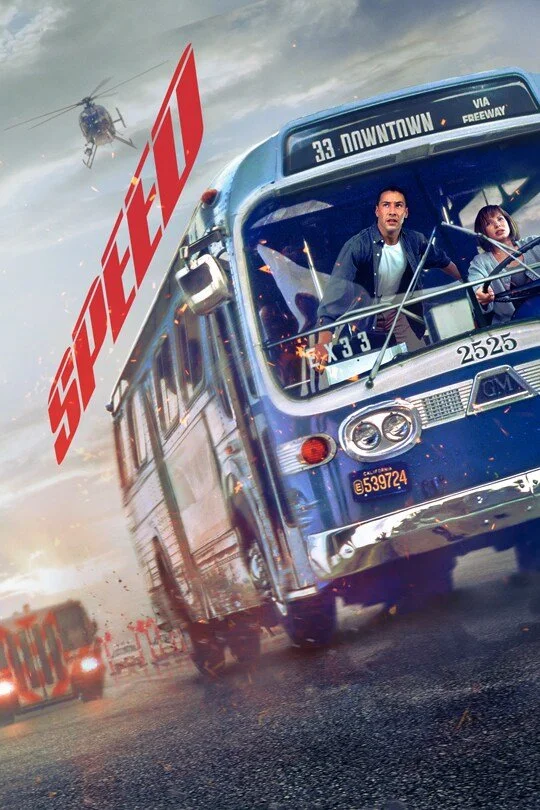
In the 1994 thriller Speed, a transit bus is rigged with a bomb: if the vehicle’s speed drops below 50 miles per hour, it explodes. In many over-optimized or under-resourced organizations, teams operate under a terrifyingly similar cultural mandate. They are locked into a frantic, non-stop sprint where any deceleration—even for vital strategic planning, process correction, or cross-functional alignment—is viewed as a fatal threat to immediate, short-term performance metrics.
This culture turns continuous improvement and change management into a luxury the organization literally cannot afford. Front-line staff and middle managers are rarely blind to operational inefficiencies; they know the software is clunky, the handoffs are broken, and the current strategy has structural flaws. However, they lack the operational latitude to take their foot off the accelerator. Because the organization has stripped away all organizational cushion in the name of "lean operations," taking two days to properly onboard a team or step back to map out cross-functional dependencies feels like pulling the pin on a grenade.
This dynamic directly validates Organizational Slack Theory, which was empirically defined by researchers Nitin Nohria and Ranjay Gulati in the Academy of Management Journal. Their work examined the role of "organizational slack," the cushion of extra resources, time, and cognitive capacity available to a firm beyond what is required for minimum daily operations.
Through extensive empirical testing, Nohria and Gulati discovered a profound inverse U-shaped relationship between operational efficiency and a firm's capacity to adopt innovation. If an organization eliminates all slack to run hyper-lean by pressing the gas pedal to 100% capacity, it paralyzes its own capacity to absorb new strategies. Employees operating with no time to think experience cognitive overload; they are structurally incapable of taking their hands off daily operations to learn new workflows or implement strategic pivots. Running a company with no slack means that even a minor operational bump causes a systemic crash.
When a strategic change initiative is introduced into a "Speed" culture, it is treated not as an opportunity, but as a dangerous distraction. Exhausted employees simply cannot process new workflows while maintaining breakneck daily operational velocities. The tragic result is an organization driving a flawed strategy at 90 miles per hour, terrified to tap the brakes, until mechanical failure or employee burnout inevitably causes a catastrophic corporate crash. For change to take root, executives must recognize that sustainable execution requires the strategic latitude to occasionally modulate velocity and build intentional slack back into the engine.
Rewriting the Script for Superior Performance
When the house lights come up and the credits roll, executive leaders are left with a stark realization: the "Culture Theater" is an expensive production. If an enterprise is locked into a cycle of institutional dogmatism (Moneyball), siloed defensiveness (The Breakfast Club), toxic internal competition (Top Gun), or frantic exhaustion (Speed), it is not because the employees are bad actors. It is because they are executing the script, hitting the cues, and playing the roles driven by culture.
True operational excellence and superior performance are achieved only when an organization intentionally aligns three critical dimensions of leadership: Strategy, Governance, and Change Management. When these three pillars operate in isolation, the theater breaks down. But when they are tightly integrated, they transform organizational miscues into a sustainable competitive advantage:
Integrated Strategy dismantles the Moneyball trap. It replaces legacy biases, gut-feel traditions, and anecdotal decision-making with clear, objective, and data-driven market positioning. It ensures the organization is playing the right game, with the right rules, for the right future.
Robust Governance breaks up The Breakfast Club and grounds the wild cards of Top Gun. By re-architecting cross-functional communication protocols and aligning incentive structures, integrated governance forces departments to drop their defensive armor. It replaces zero-sum internal tournaments with "formation flying," ensuring that individual rewards are structurally tied to systemic enterprise victories.
Strategic Change Management defuses the ticking bomb of Speed. It systematically assesses and respects the workforce's absorptive capacity, actively injecting organizational slack back into the engine. It provides overstretched teams with the tactical latitude, psychological safety, and cognitive bandwidth required to learn, adapt, and permanently adopt new strategic workflows.
To successfully operationalize this framework and prevent organizational performance from devolving, leaders must implement the following four systemic interventions:
Reconstruct Dynamic Capabilities to Mitigate Core Rigidities: Executives must recognize that digital transformation is not a singular event, but a continuous discipline. To prevent core capabilities from hardening into core rigidities during transformation initiatives, organizations should systematically evaluate their socio-technical design through a multidimensional lens. They must proactively re-align managerial career paths, provide basic technological literacy across non-technical divisions, and manage the "threat-rigidity" reflex by framing change as an opportunity-seeking, collaborative effort rather than a replacement of human expertise.
Enforce Collaborative Governance to Align Interdependent Tasks: Executive teams must reevaluate highly dispersed, tournament-style incentives and internal competition models that breed passive sabotage and relative rank manipulation. Leaders should implement "formation flying" reward models where executive and divisional bonuses are structurally tied to horizontal, cross-functional outcomes, ensuring that individual achievements are never rewarded at the expense of mutual dependencies.
Build Virtual Identification through Identity Leadership and Social Support: In geographically dispersed or hybrid work environments, managers cannot rely on physical office architecture or superficial corporate symbols to maintain organizational unity. Leaders must practice explicit "identity leadership," actively representing and championing the shared interests of the team. Furthermore, organizations must engineer robust systems of virtual social support, as this support acts as the vital environmental cue that substitutes for missing face-to-face indicators, successfully cultivating organizational identification even among workers with low intrinsic needs for affiliation.
Inject Strategic Slack to Protect Adaptive Capacity: Executives must reject the pathological pursuit of 100% human resource and operational efficiency. To prevent continuous sprint cycles from inducing cognitive overload and operational paralysis, strategic slack must be built directly into the operational architecture. In agile development frameworks, this means designating structured sprint capacity for refactoring, resolving technical debt, and team learning. This unabsorbed available slack is not an inefficiency; it is the fundamental resource cushion that provides the resilience, agility, and cognitive bandwidth required for long-term growth and survival.
Have questions or need expert guidance? Don't tackle it alone. Contact Enterprise Insight Solutions today to find out how our team can help you drive results.
Strategic References & Further Reading
Core Rigidities & Innovation: Leonard-Barton, D. (1992). Core Capabilities and Core Rigidities: A Paradox in Managing New Product Development. Strategic Management Journal. View Abstract via Wiley Online Library.
Socio-Cognitive Silos & Team Identity: Ashforth, B. E., & Mael, F. (1989). Social Identity Theory and the Organization. Academy of Management Review. View Full Study via JSTOR.
Internal Competition & Incentives: Lazear, E. P., & Rosen, S. (1981). Rank-Order Tournaments as Optimum Labor Contracts. Journal of Political Economy. View Full Study via JSTOR.
Operational Resilience & Slack Capacity: Nohria, N., & Gulati, R. (1996). Is Slack Good or Bad for Innovation? Academy of Management Journal. View Abstract via Academy of Management.